
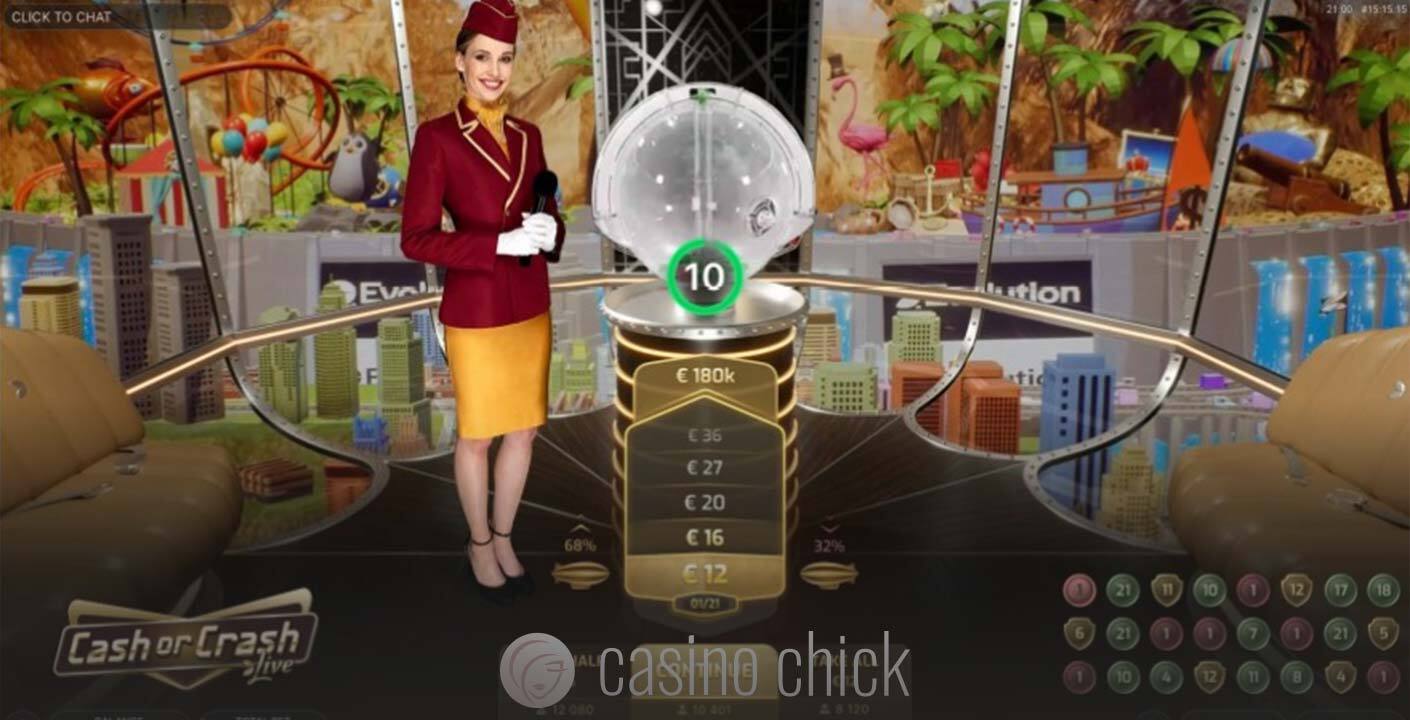
I’ve spent a lot of time exploring the live game show arena here in the UK, and let me tell you, finding a game that’s both thrilling and honest can seem like a real challenge. That’s why I got genuinely excited when I dug into the details of Cash Or Crash Live Software Providers. The buzz around its third-party verification wasn’t just advertising hype; it was a tangible stamp of honesty that changes the game entirely. For us players on British soil, where fair play is non-negotiable, this external validation from independent testing labs isn’t just a bonus—it’s the bedrock of trust. It means every thrilling decision to cash out or crash higher is driven by a truly random outcome, not some secret algorithm. I’m here to break down exactly what this certification means for your gameplay, why it is important more than you might think, and how it sets Cash or Crash Live as a outstanding choice in the bustling UK live casino market. Get ready to see this high-stakes game in a whole new light.
Which Third-Party Verification Really Represents for You
When I encounter “third-party verified,” I right away think: proof. It’s the distinction between a company just stating their game is fair and possessing a rigorous, independent auditor confirming it. For Cash or Crash Live, this process includes specialist testing houses—organisations like iTech Labs or eCOGRA, which are giants in the field—analyzing the game’s core mechanics. They do not merely take the developer’s word for it; they scrutinize the Random Number Generator (RNG) that governs whether that next balloon pops or soars. They review the return-to-player (RTP) percentages to confirm they correspond to the advertised figures, and they verify that the game functions exactly as described, with no hidden backdoors or biases. This is not a one-time check, however. Reputable certifications necessitate ongoing audits to uphold the seal of approval. For you, the player, this translates to a shield of confidence. Every time you press “Cash Out” or observe the multiplier climb, you’re participating with a system whose fairness has been attested for by an external, disinterested expert. It removes the nagging “what if” and lets you focus purely on the strategy and adrenaline of the game, which is exactly how live gaming should feel.
Comparing the Audited Session to Other Live Casino Games
Stacking Cash or Crash Live alongside other popular live dealer games highlights its special position. Look at classic games like Live Roulette or Live Blackjack. They are games of chance and skill in turn, but their outcomes are closely tied to real-world actions—a wheel spin, a card deal. Their fairness is frequently visually apparent. The “random” element in Cash or Crash Live is the invisible timing of the crash, which is why the third-party RNG certification is so essential. It offers the same level of solid proof as seeing the wheel spin. Relative to other live game shows such as Dream Catcher or Monopoly Live, which also use RNGs (random number generators) for bonus wheels, Cash or Crash Live’s entire core mechanic is RNG-driven, making its verification arguably even more integral to its credibility. This places it in a league of its own for players who value transparency. In the UK market, where alternatives abound, this certification is a strong differentiator. It signals a provider that isn’t just creating a fun game but is committed to the highest standards of operational integrity, which for a discerning player, is a major factor in deciding where to spend their time and money.
The Winning Approach: How to Bet with Conviction
With the confirmed fairness as your base, you can redirect your focus fully to planning. This is where Cash or Crash Live turns into more than just a game of chance—it becomes a test of composure and bankroll management. I’ve found that competing with a system significantly enhances the gameplay and, often, the outcomes. First, always set a budget and follow it rigorously; the fast-paced rhythm can be alluring. Second, choose a cashing-out approach before you even place a bet. Will you aim for a quick, small gain (e.g., cash out at 2x every time), or will you go after the moon on a few certain rounds? There’s no correct choice, but having a principle avoids emotional, hasty moves in the heat of the action. A well-known mid-risk tactic I sometimes use is the “ladder” technique: I’ll cash out a share of my wager at lower multipliers (like 1.5x) to ensure a return, and let the remainder run for bigger gains. Crucially, because I rely on the confirmation, I know my plan is being assessed against true chance, not a predatory setup. This lets me to assess my play objectively and adjust my approaches based on real probability, not suspicion.
Analyzing the Cash or Crash Live Gaming Experience
Let’s examine the intricacies of why this game is so captivating, especially with the assurance that verification brings. Cash or Crash Live is a game show hosted by a dynamic presenter in a studio designed to feel like you’re on a TV set. The basic idea is elegantly simple yet profoundly tactical: a hot air balloon ascends, and with each successful round, the possible payout on your bet increases. The risk? The balloon can crash at any time, erasing the potential win for that round if you haven’t cashed out. Your only job is to decide when to cash out with your winnings or ride the risk for a bigger payout. This is a typical round flow:
- The Lift-off: The round begins, and the balloon begins its ascent. The multiplier (e.g., 1.5x, 2x, 3x) increases.
- The Tension Builds: With every moment, the potential win gets higher. The host ramps up the tension, and you’re eyeing the balloon, aware a crash could strike anytime.
- The Critical Decision: You have a “Cash Out” button. Do you press it now to lock in a modest profit, or do you risk it more?
- The Conclusion: If you cash out, your win is locked in. If the balloon crashes before you cash out, you forfeit that bet. If it completes a complete ascent without crashing, those still in wins the maximum multiplier.
Aware that the crash moment is determined by a verified RNG makes this mental game authentic. The only thing you’re battling is your impulses. This certainty is liberating and makes every decision feel significant and authentic.
Why This Validation is a Major Shift for UK Players
The UK gambling market is amongst the most tightly regulated in the world, controlled by the strict rules of the UK Gambling Commission (UKGC). As a player here, I maintain high standards for safety and fairness, and deservedly so. A game simply being licensed isn’t always the full story; the third-party verification provides a vital, extra layer of scrutiny that matches perfectly with our regulatory culture. It means the game has voluntarily exposed itself to an further, often more technically rigorous, standard beyond the basic licensing requirements. This is a massive game-changer because it speaks directly to the game’s transparency. In a landscape crowded with countless live dealer options, this certification assists Cash or Crash Live slice through the noise. It demonstrates me, as a savvy UK player, that the operator and game provider are assured enough in their product to have it scrutinized and tested by the best in the business. It converts the game from a mere entertainment product into a certified entertainment product. This establishes a level of trust that encourages longer, more enjoyable gaming sessions because I’m not wasting mental energy distrusting the integrity of the game. I’m focusing it all in the thrill of the decision-making process itself.
Handling Common Player Concerns Straightforwardly
Even with verification, gamblers unfamiliar with the format often have questions. I’ll handle the big ones I hear regularly. Firstly: “Does it genuinely random, or are the crashes set to cause me to lose?” This is the main issue the external audit tackles. The auditing labs run numerous simulated rounds to examine the pattern of failures. They guarantee there’s no predictable sequence, no “cooling off” period after a big win, and no rigging. The randomness is mathematically based and verified. Next: “Does the dealer influence the game?” Not at all. The dealer is present for entertainment, connection, and to guide the progression, but they have zero input or knowledge about the time the crash takes place. Their reaction as real as the player’s. Third: “What proof is there the RTP is accurate?” The published RTP (Return to Player) is a theoretical figure calculated over millions of spins. The audit process establishes that the game’s software generates results that align with this listed figure over the long term. It may not be achieved every game session—you might have a victorious or losing spell—but the certified fairness assures the game isn’t skewed against you from the start. This third-party validation is your defense against these very valid concerns.
